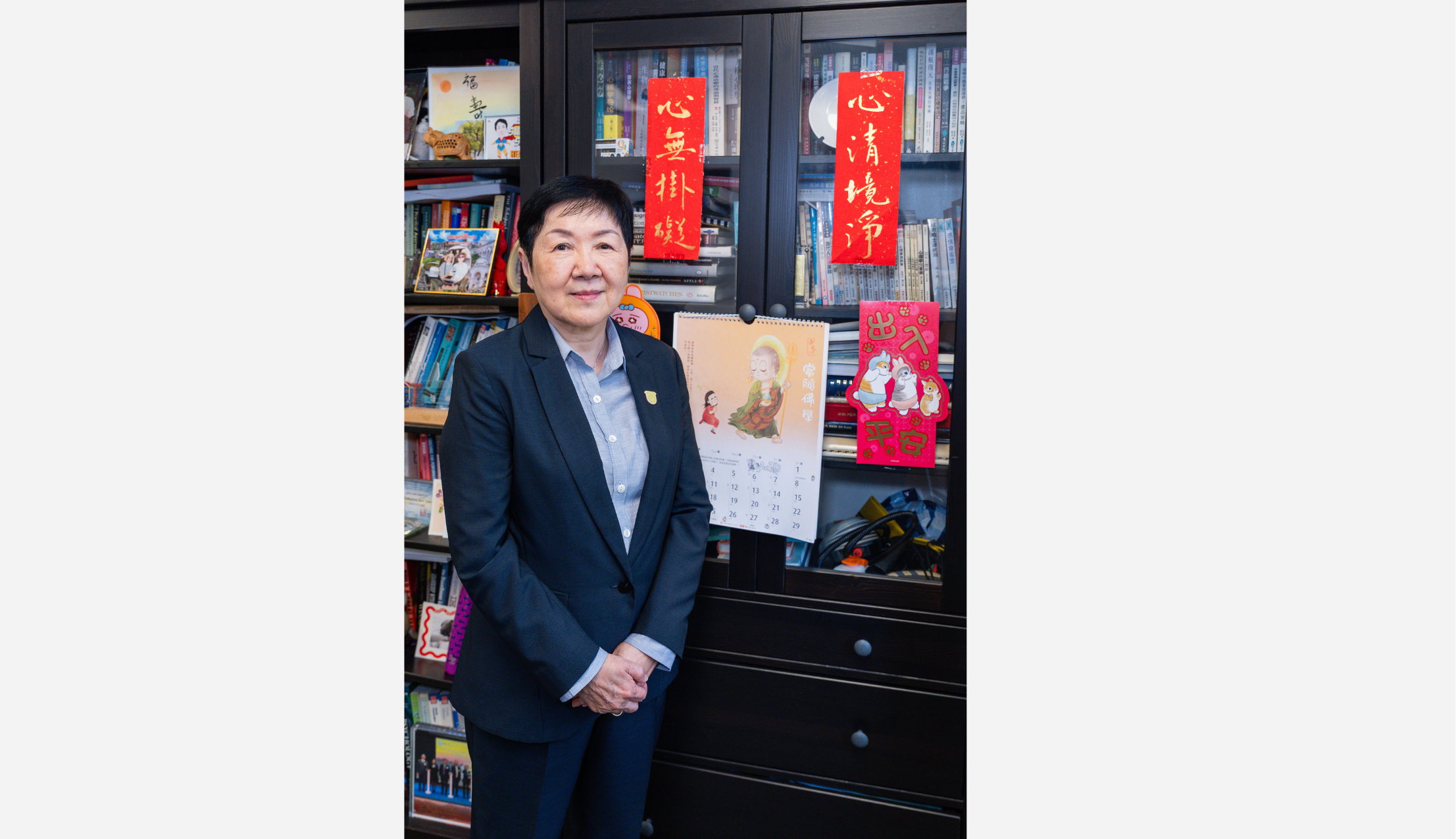
Hong Kong Shue Yan University (HKSYU) has upheld liberal arts education for over half a century. Professor Catherine SUN Tien-lun, Senior Vice President, emphasises that the founders, Dr Henry HU Hung-lick and Dr CHUNG Chi-yung, aspired to enable every individual to become a pillar of society through education. As artificial intelligence (AI) reshapes teaching and learning, Professor SUN asserts that the value of liberal arts education lies in teaching students to think from different perspectives, while AI should remain a supporting tool rather than something that dominates everything.
Dr Henry HU Hung-lick and Dr CHUNG Chi-yung founded Shue Yan in 1971, dedicating themselves to expanding access to higher education and creating additional educational pathways for young people. Professor SUN explains that one purpose of education is to nurture pillars of society who can contribute to the development of different industries and professions.
University Education Must Lead Social Change
Every era witnesses the rise of new professions while others become obsolete, and universities must nurture talent in response to changing needs. Professor SUN emphasises that, beyond responding to social change, university education should also be forward-looking and help lead social change through research and teaching. She points to Dr CHUNG, who recognised the importance of social work and psychological counselling as early as the 1970s and actively promoted the development of relevant programmes.
“University education should not only respond to society’s needs, but also anticipate what society will need in the future and prepare for it in advance.”
Moreover, university education has a responsibility to foster whole-person development. Liberal arts education encompasses cultural heritage, social values, national consciousness and mental health, aiming to nurture individuals with humanistic values and the ability to meet future challenges.
Human Strengths That AI Cannot Replace
In this era of widespread AI adoption, Professor SUN states that while AI accelerates the pace at which students acquire knowledge, it cannot replicate uniquely human qualities such as critical thinking, communication and presentation skills. It is therefore difficult for AI to completely replace traditional teaching and learning.
She points out that without a solid understanding of professional knowledge, it is difficult to evaluate the accuracy and quality of AI-generated content. Nearly every educator and student, including herself, uses AI today. Still, she cautions that AI is only a supporting tool; the key lies in how it is used.
“If you want an answer with depth and different layers, you must know how to ask questions with depth. And knowing what questions to ask has to be built on existing knowledge of the subject or topic.”
HKSYU also places importance on technology education, having established the Department of Data Science and Digital Innovation and introduced a number of new programmes incorporating digital elements in recent years. Professor SUN stresses that this direction is not simply a response to the AI trend; these new programmes can also enhance the speed, interest and depth of students’ learning while keeping pace with the needs of emerging industries.
Despite intense global competition in higher education, Professor SUN believes that Shue Yan’s commitment to liberal arts education will endure. She notes that the continued development of society requires not only “physical infrastructure” but also “human infrastructure”, including education, social welfare and mental health. These peoplecentred values and services can only make a difference through human creativity and judgement, and cannot be replaced by technology.
She emphasises that universities are not here to nurture robots, but to nurture “people” who can lead society towards a better future. This, she says, is why Shue Yan has remained committed to liberal arts education for 55 years.
University Education Enriches Life
Addressing public scepticism about the necessity of attending university, Professor SUN believes this ultimately depends on the kind
of life young people want to lead, as career planning is closely linked to personal values. She believes that university education can broaden horizons and foster creativity and critical thinking.
“I can see the world from more perspectives and at different levels, and my life is richer as a result.”
She recalls a fellow university graduate who studied geography before becoming a photographer. His knowledge of geography enabled him to draw connections between what he had learned and his work, helping him produce outstanding photographs.
“If you are studying simply to make a living or to survive, you may not need to go to university. But if you want to experience a richer life, I believe you should learn and study more.”
Source: 55th Anniversary Special Issue – September 2026