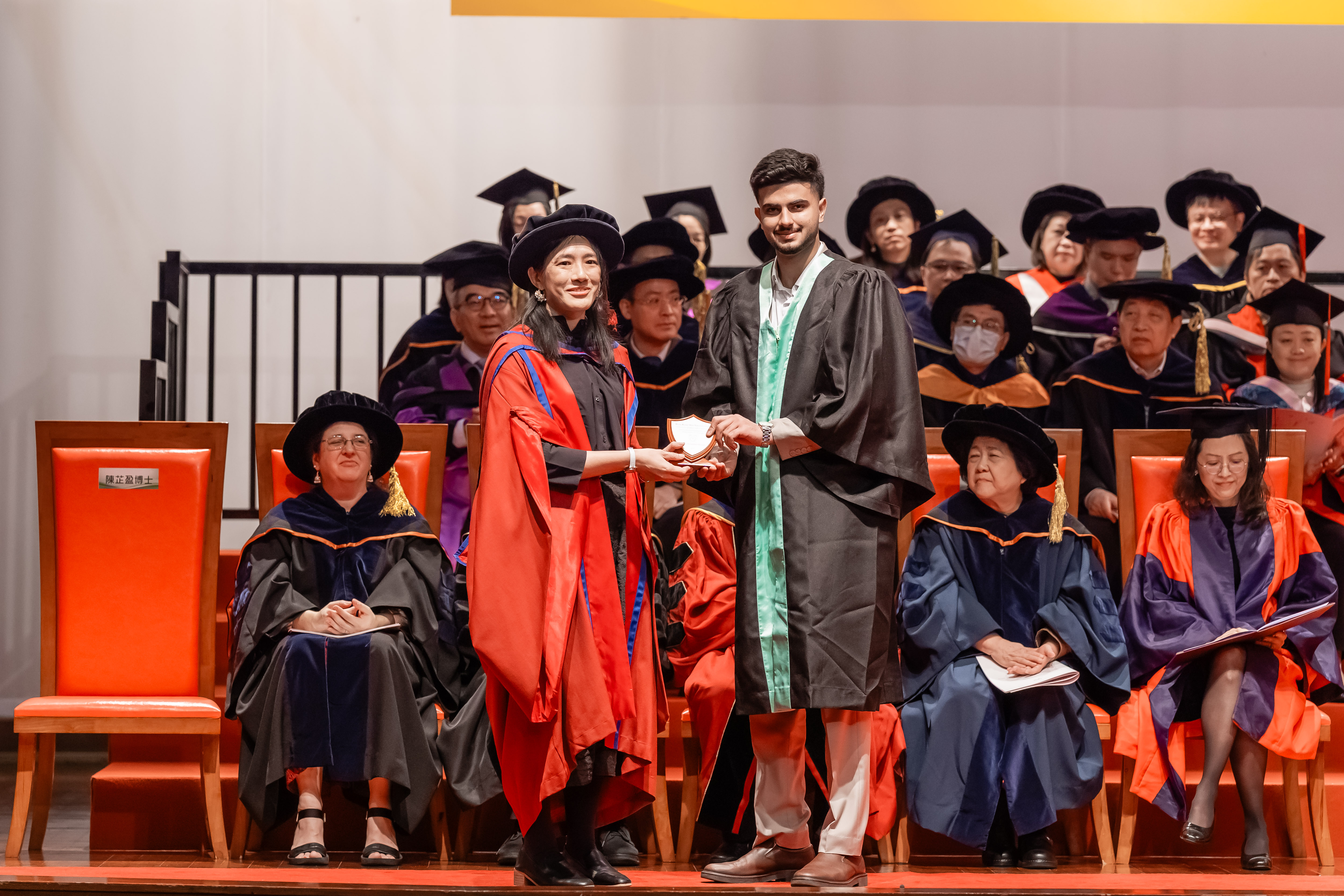
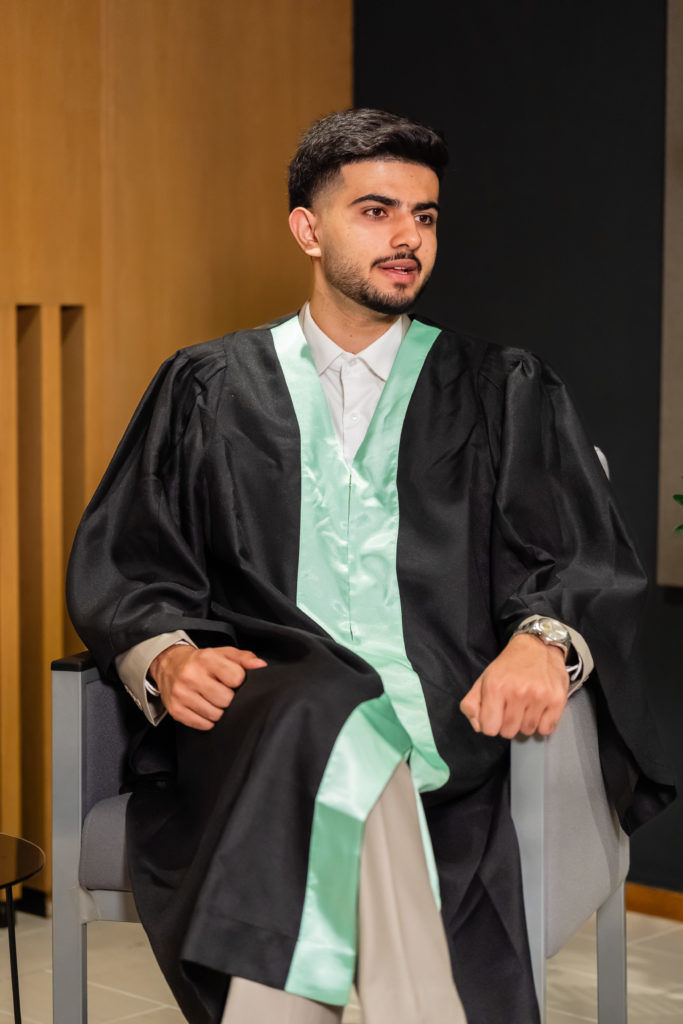
When Muhammad Muaarij Haider first arrived at Hong Kong Shue Yan University (HKSYU) from the city of Chakwal, Pakistan, he wasn’t just bringing his luggage—he had a sharp focus on his academic future. One year later, having graduated from the International Foundation Year Programme (IFYP) with a stellar 3.7 GPA, Haider has proven that with the right environment, the transition from South Asia to Hong Kong can be seamless.
Choosing the Path Less Traveled
For many international students, the United States or the United Kingdom are the default destinations for foundation studies. However, Haider’s heart was set on Hong Kong. “I researched international studies and found the IFYP at Shue Yan to be a very suitable bridge for my higher education,” he explains.
His decision was deeply personal; with a family member already rooted in the city—an uncle who has lived here for 17 years—Hong Kong felt less like a foreign land and more like a second home.
A Comfortable Landing in the IFYP
One might expect a student from foreign studies in the university at that time [before his cohort], but I soon found 15 of my classmates were here from India, Myanmar, and South Korea,” he says. This diverse Pakistan to feel isolated in a local Hong Kong university, but Haider found the opposite. “There were no cohort created a “no-discrimination” zone where he felt immediately at ease.
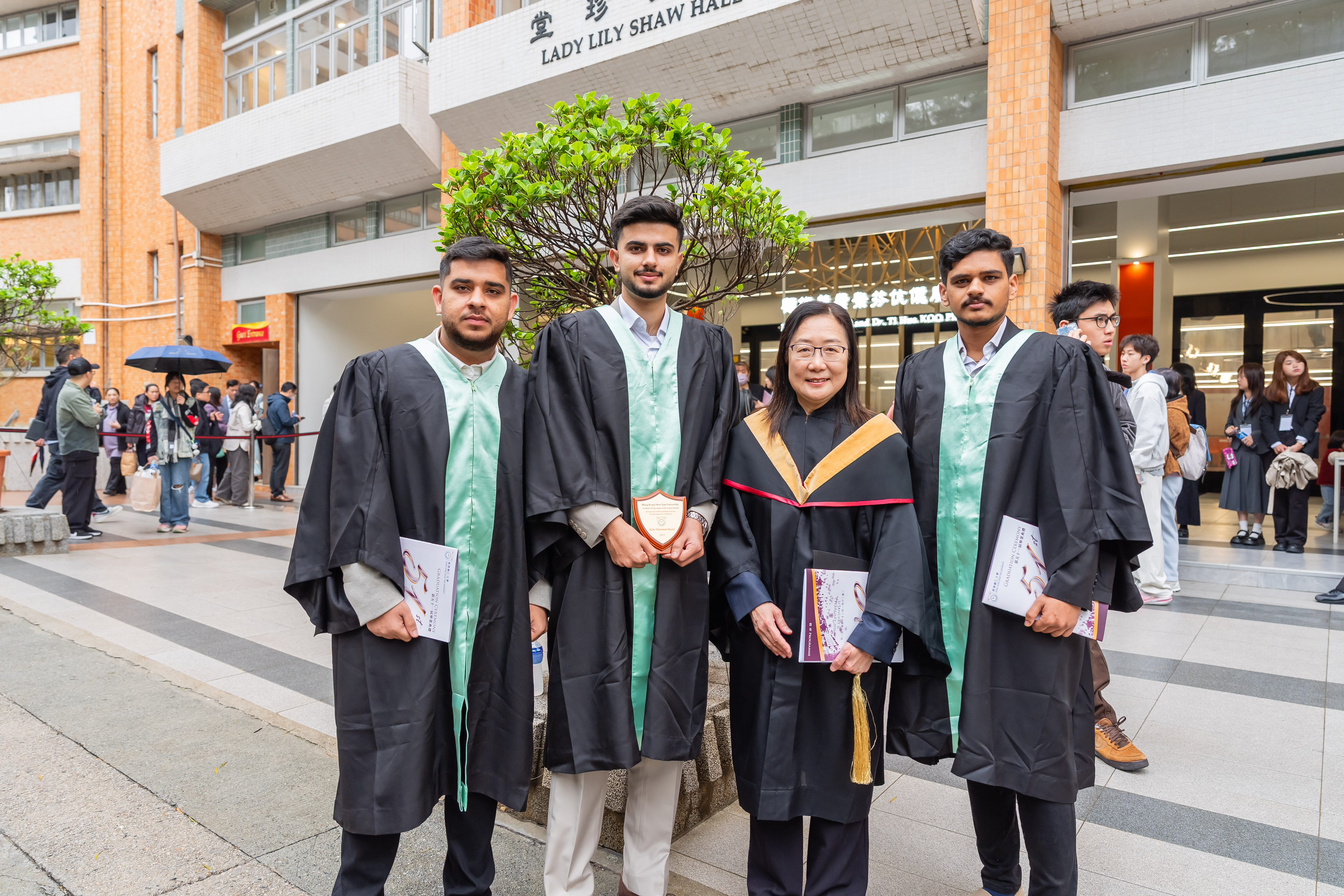
The IFYP served as more than just an academic stepping stone. While Haider found the English-medium instruction natural due to his international school background in Pakistan, it was the Cantonese workshops and Cultural study courses that truly opened doors. “Those taught me basic speaking—enough to buy things—and the field trips to Aberdeen for fishing and noodles let me merge with the Hong Kong lifestyle,” he recalls.
Navigating the Many Sides of Hong Kong
Haider’s perspective on Hong Kong culture is one of appreciation for its contrasts. He finds himself drawn to the colorful, multi-ethnic energy of Central in the evenings, yet seeks out the familiar comfort of Tsim Sha Tsui, a hub for the Pakistani and Indian communities.
While he admits that socializing can be a slow process— noting that many students from Chinese Mainland are still gaining confidence in their English—he speaks highly of the “cooperative and equal” treatment from HKSYU faculty. “The teachers start from the very basic level and even give us space and holidays for our own special religious events,” he notes, highlighting the university’s inclusive atmosphere. For a Muslim student, finding Halal options in the canteen and a dedicated prayer area in the Research Complex made the campus feel like a true community.
Looking Ahead: A Future in Law
Now moving into his Bachelor’s Programme in Law and Business, Haider has his sights set on the Juris Doctor (JD) program at another local university. His ultimate goal? To serve the city that welcomed him as a foreign or local lawyer. As he reflects on his time so far, Haider is already thinking of those who will follow in his footsteps. He advocates for more space for the growing Pakistani student body—now numbering around 30—and hopes to see a cricket team and more authentic Pakistani flavors in the canteen soon.
For Haider, HKSYU wasn’t just a place to study; it was the place where his international career began. “The environment is comfortable, the teachers are helpful, and the opportunity is there if you have the passion.”
Source: March 2026 Issue